Water & Sewer Infrastructure Updates

Share Water & Sewer Infrastructure Updates on Facebook Share Water & Sewer Infrastructure Updates on Twitter Share Water & Sewer Infrastructure Updates on Linkedin Email Water & Sewer Infrastructure Updates link

Major Infrastructure & Resiliency Updates for Tybee Island

The City of Tybee Island is investing in the community’s future with several major projects underway:


15th Street Outfall & Storm Line Expansion
The City has received a $2.6 million federal grant (plus a $650,000 local match) to expand the outfall and storm line beneath 15th Street. Engineering and design are nearly complete, with State permitting and competitive bidding up next. Construction is expected to begin in January and finish by late May.


14th Street Reservoir Project
The City expects to hear this fall on a $10 million grant to build a stormwater reservoir beneath the 14th Street parking lot. This would connect to the 15th Street project and greatly improve stormwater management. Current updates indicate the application is in a favorable position for funding.


Hazard Mitigation Funds
The City has worked with GEMA to cancel the Safe Shelter grant and reapply those hazard mitigation funds toward other resiliency and stormwater projects identified in the Stormwater Management Plan, Community Resilience Plan, and Natural Infrastructure Master Plan.


Sanitary Sewer Improvements
This summer, the City secured a $2.4 million GEFA loan at a low 2.49% interest rate to complete key sewer system improvements outlined in the five-year Capital Improvement Plan.


SPLOST Funding
An Intergovernmental Agreement (IGA) with the County includes $4.3 million in SPLOST funding for Tybee stormwater and resiliency infrastructure projects. This item will appear on the November ballot.


These investments will strengthen Tybee’s infrastructure, reduce flood risk, and make the island more resilient for years to come.

Major Infrastructure & Resiliency Updates for Tybee Island

The City of Tybee Island is investing in the community’s future with several major projects underway:


15th Street Outfall & Storm Line Expansion
The City has received a $2.6 million federal grant (plus a $650,000 local match) to expand the outfall and storm line beneath 15th Street. Engineering and design are nearly complete, with State permitting and competitive bidding up next. Construction is expected to begin in January and finish by late May.


14th Street Reservoir Project
The City expects to hear this fall on a $10 million grant to build a stormwater reservoir beneath the 14th Street parking lot. This would connect to the 15th Street project and greatly improve stormwater management. Current updates indicate the application is in a favorable position for funding.


Hazard Mitigation Funds
The City has worked with GEMA to cancel the Safe Shelter grant and reapply those hazard mitigation funds toward other resiliency and stormwater projects identified in the Stormwater Management Plan, Community Resilience Plan, and Natural Infrastructure Master Plan.


Sanitary Sewer Improvements
This summer, the City secured a $2.4 million GEFA loan at a low 2.49% interest rate to complete key sewer system improvements outlined in the five-year Capital Improvement Plan.


SPLOST Funding
An Intergovernmental Agreement (IGA) with the County includes $4.3 million in SPLOST funding for Tybee stormwater and resiliency infrastructure projects. This item will appear on the November ballot.


These investments will strengthen Tybee’s infrastructure, reduce flood risk, and make the island more resilient for years to come.
  • 12-9-2025 I and I Presentation

    Share 12-9-2025 I and I Presentation on Facebook Share 12-9-2025 I and I Presentation on Twitter Share 12-9-2025 I and I Presentation on Linkedin Email 12-9-2025 I and I Presentation link
    supporting image

    City Advances Plan to Reduce Sewer Overflows Through Targeted Infrastructure Improvements

    At a recent City Council Workshop, City Engineer Pete Gulbronson provided an update to City Council on infrastructure improvements. The City of Tybee Island is taking important steps to address inflow and infiltration (commonly referred to as “I&I”) within the sanitary sewer system—an issue that contributes to sewer overflows during heavy rain events and places added strain on wastewater infrastructure.

    What is Inflow and Infiltration?
    Inflow occurs when stormwater enters the sanitary sewer system through improper connections such as roof drains, driveway drains, or leaking manhole covers. Infiltration happens when groundwater seeps into sewer pipes through cracks, deteriorated joints, or damaged infrastructure. Together, these issues can overwhelm the system, especially during significant rainfall, and lead to sewer spills.

    Recent rainfall events in the late summer highlighted the urgency of the issue, with the City’s Wastewater Treatment Plant processing an average of 2.1 million gallons of additional water during peak storms. In response, City staff launched a comprehensive investigation to pinpoint problem areas within the system


    Investigation and Key Findings

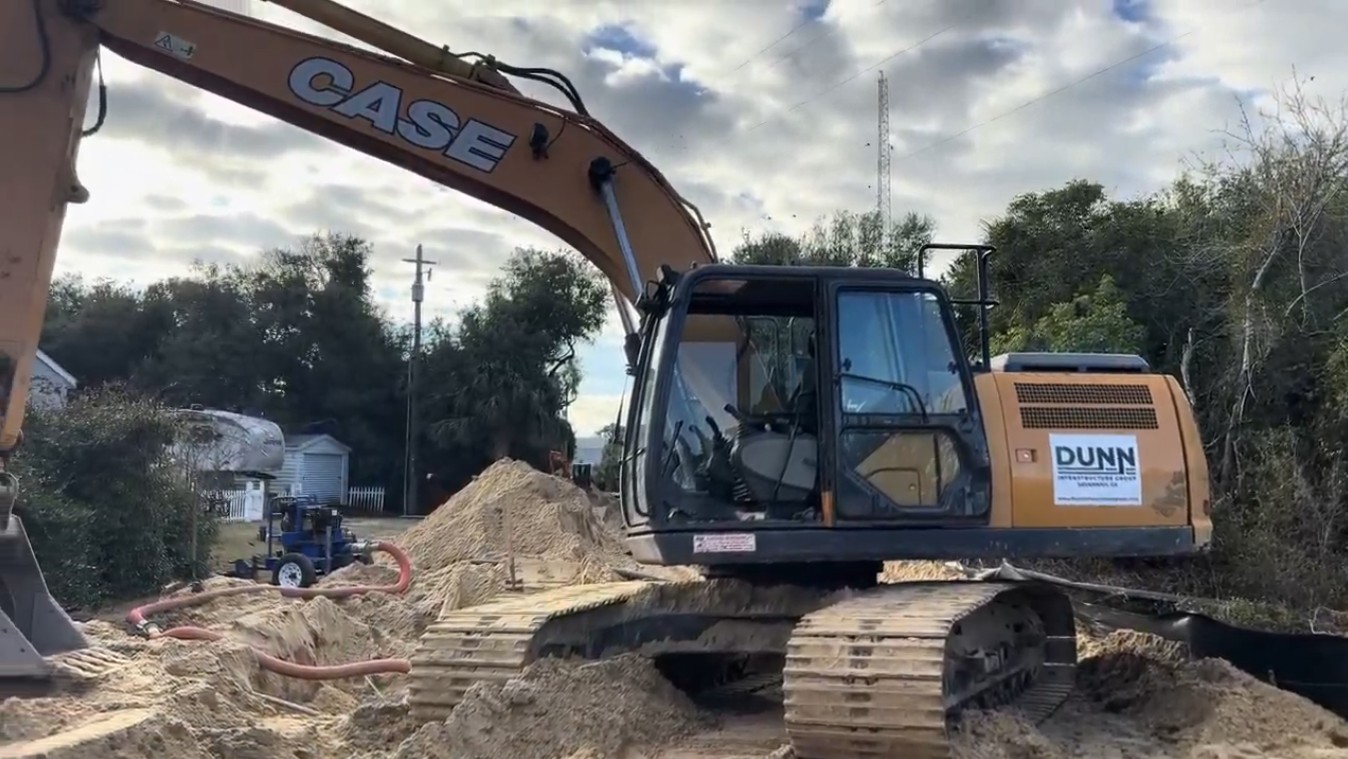
    The City cleaned and televised approximately 5,500 linear feet of sewer lines, focusing on areas with abnormally high pump run times—particularly at Lift Station #2. This investigation identified three major sources of infiltration:

    1. Failing Manholes

    2. Deteriorated Sanitary Sewer Mains

    3. Leaking Private Sewer Laterals


    Work Completed to Date

    Several corrective actions have already been completed:

    • Manhole Rehabilitation:

      • A manhole on Miller Avenue was raised four feet above the floodplain and sealed to prevent stormwater intrusion.

      • Four additional brick manholes were rehabilitated and lined with epoxy to create a watertight interior.

    • Emergency Sewer Repair:

      • A partially collapsed sewer line at 209 Jones Avenue was repaired, including installation of a new manhole, after a sinkhole was discovered during inspections.

    These completed efforts represent a significant first step toward reducing excess water entering the sewer system.


    Proposed and Upcoming Improvements

    Based on inspection results, the City is proposing a multi-phase rehabilitation strategy:

    • Manhole Improvements:
      Rehabilitation of 27 additional manholes currently in poor condition.

    • Sanitary Sewer Line Rehabilitation:
      Replacement or lining of nearly 1,700 feet of sewer main in high-priority areas where pipes are aging, damaged, or have collapsed in the past.

    • Private Lateral Program (In Development):
      Inspections identified 61 leaking private sewer laterals, which also contribute to I&I. While laterals are the responsibility of property owners, the City is developing policy options that may include cost-sharing programs, City-managed repairs with repayment through utility billing, or required owner repairs.


    Funding Strategy

    To help offset costs, the City plans to pursue funding through the Georgia Environmental Finance Authority (GEFA), including:

    • A low-interest loan with up to 30% principal forgiveness for sewer rehabilitation projects.

    • A fully forgivable loan for additional sewer inspections and wastewater treatment plant assessments.

    If approved, these funding sources could significantly reduce the financial burden of these critical infrastructure improvements.


    Looking Ahead

    Reducing inflow and infiltration is a key part of protecting public health, improving environmental resilience, and ensuring the long-term reliability of Tybee Island’s sewer system. City staff will continue refining project priorities, seeking funding opportunities, and developing policies to address both public and private infrastructure needs.

    Additional updates will be shared as projects move forward.

  • 3 I & I Warnings

    Share 3 I & I Warnings on Facebook Share 3 I & I Warnings on Twitter Share 3 I & I Warnings on Linkedin Email 3 I & I Warnings link

    3 Warning Signs of Inflow & Infiltration (I&I)

    Did you know? When clear water (rainwater or groundwater) leaks into the sewer system, it gets treated just like wastewater. This may sound harmless — but it can strain the system, cause backups, and drive up infrastructure costs for the community.

    Here are three signs that a property or neighborhood may be experiencing I&I:

    1. Sewer Pumps Running Constantly After Rain

    If lift station pumps run continuously — or start/stop rapidly — after a storm, rainwater may be entering the sewer system where it shouldn’t. This adds extra stress to the system and can reduce capacity for real wastewater.

    2. Backed-Up Pipes & Flooding During Storms

    Signs may include:

    • Manholes overflowing during heavy rain
    • Stormwater not draining properly
    • Basements or low areas flooding

    These can point to sewer pipes being overwhelmed by stormwater entering the system.

    3. Sudden Spikes in Flow at Treatment Facilities

    • Big jumps in flow during rain or high groundwater periods often indicate groundwater or stormwater leaking into cracked pipes or faulty connections.

    Why it matters
    One cracked pipe in a recent case was leaking 8 gallons of groundwater per minute. If left untreated, that would equal:

    • 4.2 million gallons per year
    • $8,400–$21,000 in treatment costs

    Fixing I&I issues protects our environment and our community’s budget.

  • What is Inflow and Infiltration?

    Share What is Inflow and Infiltration? on Facebook Share What is Inflow and Infiltration? on Twitter Share What is Inflow and Infiltration? on Linkedin Email What is Inflow and Infiltration? link

    What is I&I?

    🌧️🚫 Why Inflow & Infiltration (I&I) Matters on Tybee

    When rainwater or groundwater enters the sewer system, it can overload pipes and treatment facilities. This is called I&I — and it can cause sewer backups, overflows, and increased maintenance costs for our community.

    Inflow = stormwater getting into the sewer
    This can happen through:
    • Roof downspouts tied to sewer lines
    • Yard/driveway drains connected to sewer
    • Sump pumps going into sewer pipes
    • Leaky manhole covers

    Usually during heavy rain or storms 🌧️

    Infiltration = groundwater seeping in
    This happens when groundwater enters through:
    • Cracked pipes
    • Loose joints
    • Aging sewer lines
    • Damaged manholes

    Often during periods of high groundwater 💧

    💡 Why this matters:
    Our sewer system is designed for wastewater — not stormwater. Too much extra water can strain our system, cause backups, and impact our waterways.

    We all play a part in keeping Tybee’s system healthy and resilient.

  • Regional Water Strategy Discussed

    Share Regional Water Strategy Discussed on Facebook Share Regional Water Strategy Discussed on Twitter Share Regional Water Strategy Discussed on Linkedin Email Regional Water Strategy Discussed link

    Water and Sewer Director Daryl McCorkle and City Manager Bret Bell attended an EPD listening session last week focused on permitting strategies for the Upper Floridan Aquifer in Coastal Georgia. Representatives from across the region were invited to this and a previous session held two months ago to discuss regional water resource issues in preparation for the EPD’s upcoming issuance of new withdrawal permits over the next several years.

    A key topic of discussion centered on the closure of International Paper, which currently holds a permit allowing the withdrawal of more than 11 million gallons of water per day from the Upper Floridan. By comparison, the City of Tybee Island is permitted to withdraw up to 1.6 million gallons per day during the summer season.

    EPD officials noted that International Paper is expected to retain its current allocation for at least another two years while the future of the facility is determined.

  • Grant Opportunity for Infrastructure Improvements

    Share Grant Opportunity for Infrastructure Improvements on Facebook Share Grant Opportunity for Infrastructure Improvements on Twitter Share Grant Opportunity for Infrastructure Improvements on Linkedin Email Grant Opportunity for Infrastructure Improvements link
    supporting image

    Grant Opportunity for Infrastructure Improvements

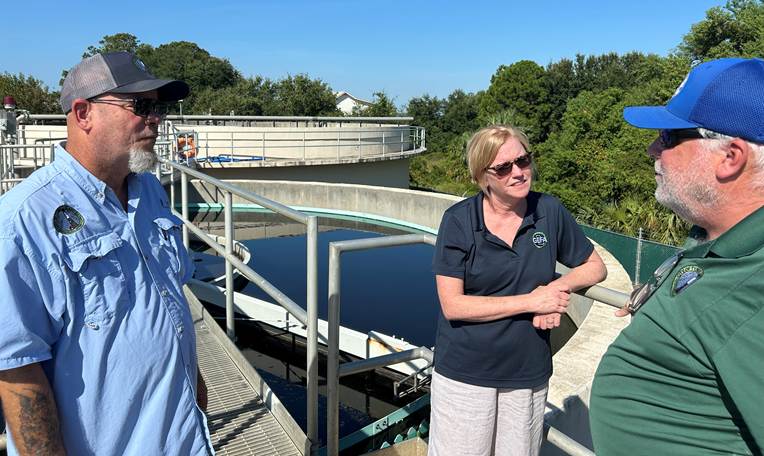
    City Manager Bret Bell, City Engineer Pete Gulbronson, and Water & Sewer Director Daryl McCorkle met last week with Judy Adler of the Georgia Environmental Finance Authority (GEFA) to discuss potential funding opportunities aimed at addressing sanitary sewer inflow and infiltration issues affecting the south end of Tybee Island.

    GEFA recently announced a one-time Hurricane Helene Resilience Funding opportunity for counties designated as disaster areas, including Chatham County. The program is designed to enhance the resilience of wastewater and drinking water infrastructure in small communities. Under this program, GEFA may waive 30–50% of the loan principal for qualifying projects. Ms. Adler expressed optimism that several of the projects currently being identified to mitigate large, rain-induced sewage spills could qualify for this funding. City staff are compiling a project list to submit as part of the Helene program application by the December 31 deadline.

    During the meeting, the group also toured the Wastewater Treatment Plant, where a City-hired contractor, BRW Construction, was using heavy equipment to repair a faulty drain valve on clarifier No. 1. The repair required excavation more than ten feet deep to locate the valve. The work has since been completed, and the valve is now fully operational—serving as a reminder of the complex and demanding work required each day to maintain and operate the City’s utility systems.

  • Ongoing Progress on Sewer System Improvements

    Share Ongoing Progress on Sewer System Improvements on Facebook Share Ongoing Progress on Sewer System Improvements on Twitter Share Ongoing Progress on Sewer System Improvements on Linkedin Email Ongoing Progress on Sewer System Improvements link
    supporting image

    Ongoing Progress on Sewer System Improvements

    The City continues to make steady progress in addressing the inflow and infiltration issues that contributed to three sewer spills during the summer months.

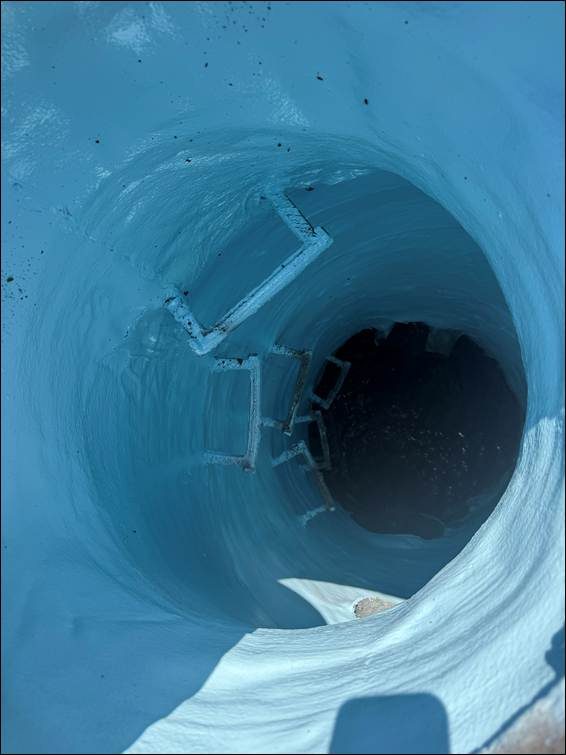
    Earlier inspections revealed that several raised manholes along Jones Avenue had begun to deteriorate, leading to both surface spills and concrete obstructions within the sewer lines that restricted flow. Two weeks ago, City crews successfully cleared the debris and repaired the manholes at Jones and 2nd, Jones and 3rd, 807 Jones, and 209 Jones with a two-inch-thick layer of hydraulic cement.

    Last week, contractors applied a Raven 410 epoxy coating to seal the new cement layer, ensuring the manholes are now watertight. City Engineer Pete Gulbronson is currently reviewing hours of inspection footage from the sewer lines as part of ongoing efforts to develop a long-term plan to address infiltration challenges in partnership with engineering consultants.

    In addition, City staff are scheduled to meet this Wednesday with representatives from the Georgia Environmental Finance Authority (GEFA) to discuss Tybee’s water and sewer infrastructure priorities and potential eligibility for the newly established Hurricane Helene Resilience Fund. This one-time funding opportunity, available to communities in counties declared disaster areas by Hurricane Helene—including Chatham County—offers partial loan forgiveness for projects that strengthen the resilience of publicly owned drinking water and wastewater systems.

  • Progress on Infiltration and Inflow Investigation

    Share Progress on Infiltration and Inflow Investigation on Facebook Share Progress on Infiltration and Inflow Investigation on Twitter Share Progress on Infiltration and Inflow Investigation on Linkedin Email Progress on Infiltration and Inflow Investigation link

    Progress on Infiltration and Inflow Investigation

    Following one of the rainiest Augusts on record, recent dry weather has provided much-needed relief and the opportunity for City staff to step back, evaluate operations, and continue investigating the sources of infiltration and inflow that overwhelmed the sanitary sewer system on the south end of Tybee during heavy rain events—resulting in three sewage spills.

    Last week, the City’s contractor, PKX, completed jetting and televising all sewer lines and lift stations in the Jones and Miller Avenue area, where the issues occurred. City staff are now reviewing the video footage to identify problem areas and develop a targeted corrective action plan.

    Additionally, contractors recently rehabilitated several raised sanitary sewer manholes that had experienced concrete deterioration. This week, those manholes are being lined to further improve system integrity and prevent future spills.

    Water and Sewer staff have also implemented new proactive protocols for managing lift station capacity. Moving forward, they are authorized to monitor weather forecasts and preemptively pump down lift stations in advance of significant rainfall to increase available capacity and reduce the risk of overflow.

    These efforts have provided valuable insight into the condition of the City’s sewer infrastructure and reinforced the need for a consistent, long-term capital improvement strategy to maintain system resilience and reliability.

Page last updated: 23 Dec 2025, 03:20 PM